When emotions feel bigger, faster, and harder to control, understanding what is happening can be the first step toward finding peace.
Have you ever felt an emotion so strongly that it seemed to take over your entire body?
A small disappointment feels like a crushing failure. A simple criticism feels like rejection. A disagreement with someone you love turns into anger, sadness, or a feeling that everything is falling apart.
You may find yourself asking:
"Why am I reacting this way?"
"Why can't I just calm down?"
"Why does everything feel so intense?"
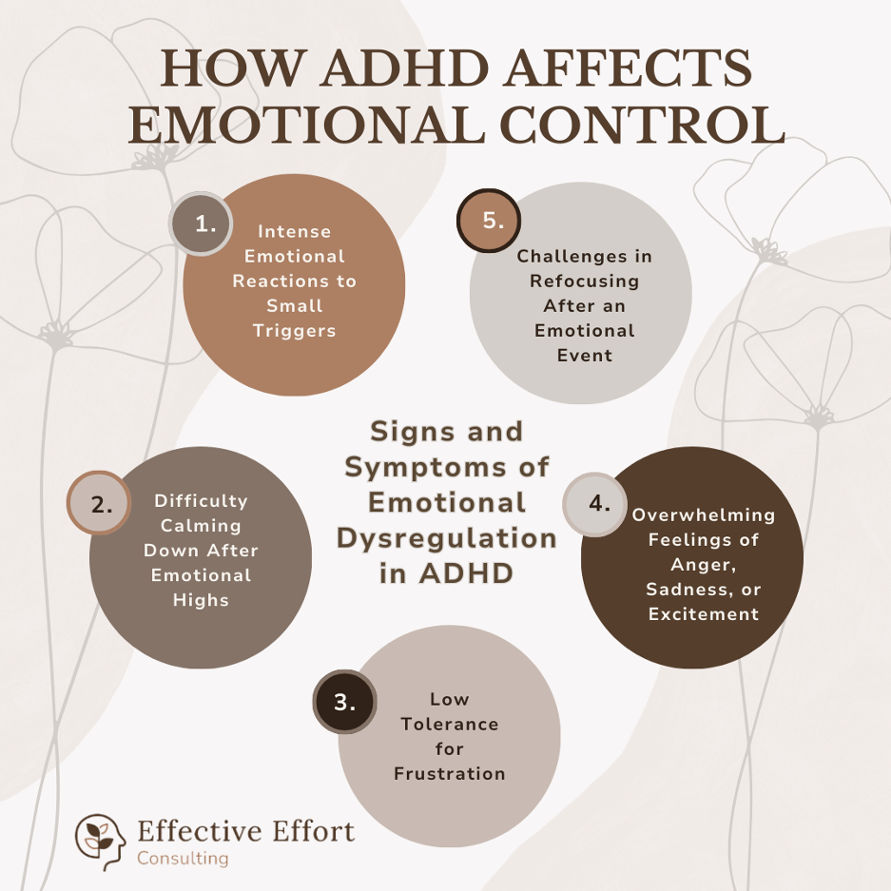
For many people living with ADHD, these experiences are familiar. While ADHD is commonly associated with difficulty focusing, impulsivity, and problems with organization, there is another important part of the experience that deserves attention: emotional dysregulation.
Emotional dysregulation can make feelings harder to manage, especially when stress, frustration, rejection, or disappointment enters the picture. This does not mean a person is weak, immature, or choosing to overreact. It means their emotional responses may be more difficult to regulate in the moment.
Understanding this can change the way we see ourselves and the people we love.
What Is Emotional Dysregulation?
Emotional dysregulation refers to difficulty managing the intensity, duration, or expression of emotions.
Everyone experiences strong emotions. Anger, sadness, fear, excitement, and disappointment are part of being human. The difference for someone experiencing emotional dysregulation may be how quickly emotions rise, how intensely they are felt, or how difficult it is to return to a calmer state.
A person may know intellectually that a situation is not the end of the world, yet their emotional system feels as though it is.
They may think:
"I know I shouldn't be this upset, but I am."
"I can't seem to turn my emotions off."
"I was fine a minute ago. What happened?"
"I wish I could respond differently."
These experiences can be exhausting. They can also create shame when a person believes they should have more control.
Emotional dysregulation is not the same as having emotions.
The goal is not to stop feeling. The goal is to develop the ability to recognize, understand, and respond to emotions without being completely controlled by them.
Why Can ADHD Make Emotions Feel So Intense?
ADHD is a neurodevelopmental condition that affects attention, impulse control, and executive functioning. Executive functioning includes the mental skills we use to pause, plan, shift attention, and regulate our responses.
Emotional regulation also requires many of these skills.
When a person with ADHD becomes overwhelmed, the ability to pause before reacting may become more difficult. This can make an emotional response feel immediate and powerful.
1. The emotional response may happen before the pause.
One of the challenges associated with ADHD is difficulty inhibiting impulses. This can affect emotional reactions as well as actions.
A frustrating comment may lead to an immediate angry response. A disappointing event may trigger tears before the person has had time to process what happened.
The emotion is real, but the response may come before reflection.
That pause between feeling and responding is an important skill—and it can be harder to access when someone is stressed or overwhelmed.
2. Frustration can build quickly.
Many people with ADHD experience difficulty with tasks that require sustained effort, waiting, or repeated correction.
Imagine spending an hour trying to complete something that seems simple to everyone else. You become distracted, lose your place, make a mistake, and have to start again.
The frustration builds.
Eventually, the emotional response may feel much bigger than the task itself.
This is not necessarily because the person does not care. Often, they care deeply. The repeated effort, disappointment, and mental fatigue can become overwhelming.
3. Rejection and criticism may feel especially painful.
Some people with ADHD describe intense emotional pain in response to perceived rejection, criticism, or disapproval. This is sometimes called rejection sensitive dysphoria, or RSD.
RSD is a commonly used term, but it is not a formal diagnosis recognized in the DSM-5-TR. It is often used to describe a pattern of strong emotional responses to rejection or perceived failure.
For someone experiencing this, a simple comment such as:
"That could have been done differently."
May be heard emotionally as:
"I'm not good enough."
"Everyone is disappointed in me."
"I always mess things up."
The person may understand that the criticism was not intended to be devastating, but the emotional pain can still feel overwhelming.
It is important to remember that not everyone with ADHD experiences this, and intense reactions to rejection can occur in people without ADHD as well.
4. Difficulty shifting attention can affect emotions.
ADHD can make it difficult to shift attention away from something that is emotionally upsetting.
You may know you need to move on, but your mind keeps returning to the conversation, the mistake, or the disappointment.
"What did they mean by that?"
"Why did I say that?"
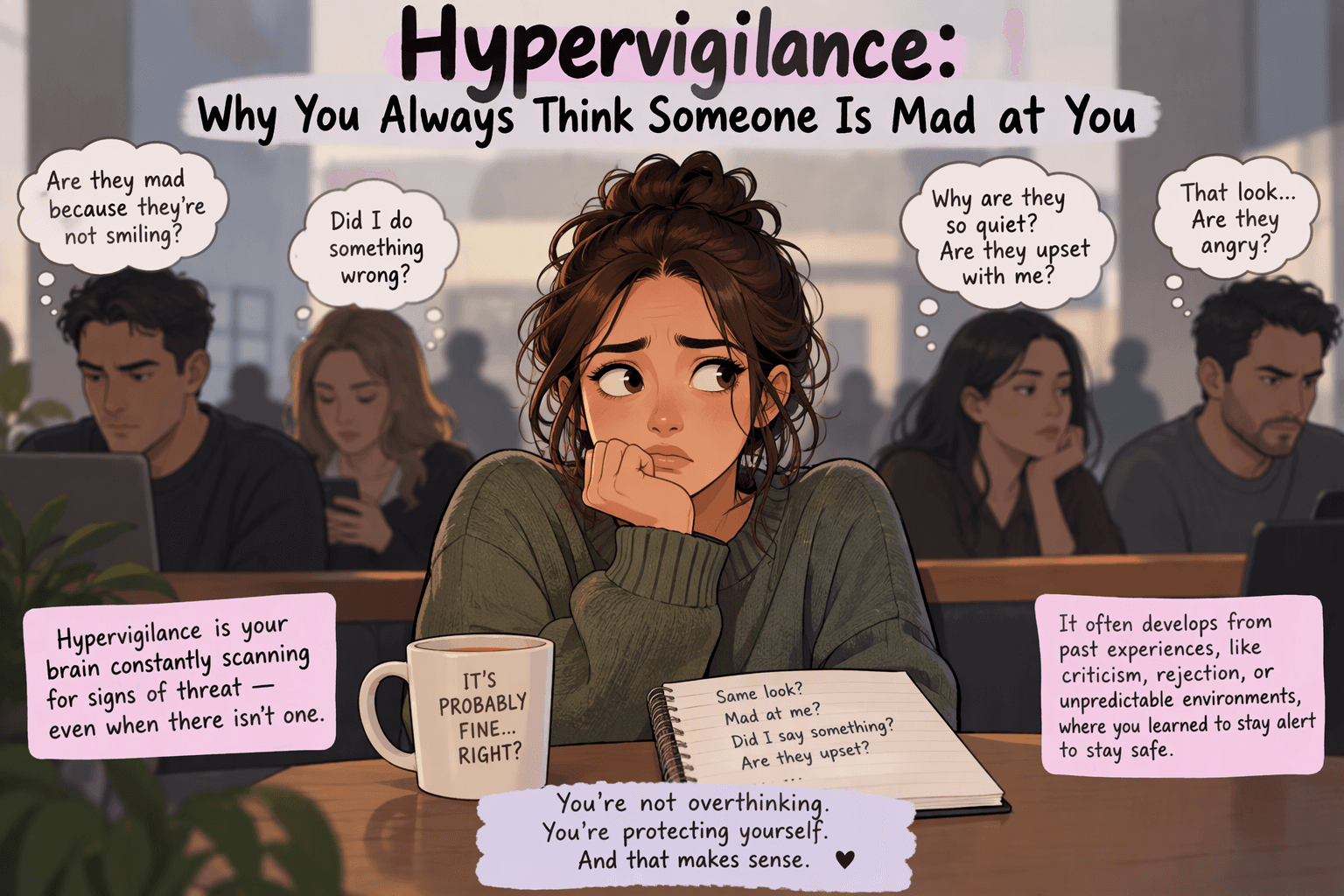
"What if they are angry with me?"
The mind continues replaying the situation, and the emotion may remain intense long after the event has ended.
This can make it difficult to sleep, focus, or enjoy the rest of the day.
5. Stress, exhaustion, and overstimulation can make regulation harder.
Emotional regulation is affected by many factors, including sleep, stress, hunger, and the demands of daily life.
When someone with ADHD is already mentally exhausted, even a small additional stressor may feel like too much.
A busy environment, multiple responsibilities, a difficult conversation, or an unexpected change in plans can push the person beyond their ability to cope in that moment.
This does not mean the person is intentionally being difficult.
Sometimes the nervous system is simply overwhelmed.
Why Does Everything Feel So Personal?
One of the most painful parts of emotional dysregulation can be the way an experience affects a person's sense of self.
A mistake becomes:
"I'm a failure."
A disagreement becomes:
"They don't love me."
A missed deadline becomes:
"I can never do anything right."
This is sometimes called emotional reasoning—when the intensity of a feeling makes a conclusion seem unquestionably true.
The feeling is real. The conclusion may not be.
Feeling rejected does not always mean you have been rejected.
Feeling like a failure does not mean you are a failure.
Feeling out of control does not mean you are incapable of learning new skills.
Your emotions deserve to be heard, but they do not have to define who you are.
The Shame Cycle of Emotional Dysregulation
For many people, the hardest part is not only the emotional reaction itself. It is what happens afterward.
A person becomes overwhelmed, reacts strongly, and later feels guilty or ashamed.
They may think:
"Why did I say that?"
"I hurt someone I love."
"Something is wrong with me."
"I should be able to control myself."
That shame creates more stress. The additional stress can make future emotional regulation even harder.
This can become a cycle:
Trigger → Intense emotion → Reaction → Shame → More stress → Increased vulnerability to another intense reaction
Breaking this cycle begins with understanding rather than condemnation.
You are responsible for your actions, but you do not have to hate yourself in order to learn from them.
What Can Help With ADHD and Emotional Dysregulation?
Emotional regulation is a skill that can be developed. It may take practice, patience, and professional support, but improvement is possible.
Here are some practical strategies.
1. Name the emotion.
Before trying to solve the problem, identify what you are feeling.
Is it:
Anger?
Sadness?
Fear?
Shame?
Disappointment?
Overwhelm?
Rejection?
Frustration?
Putting a name to an emotion can create a little space between you and the feeling.
Instead of saying:
"Everything is terrible."
Try:
"I'm feeling overwhelmed and rejected right now."
This does not make the emotion disappear, but it can help you understand what is happening.
2. Give yourself permission to pause.
When emotions rise, the first goal may not be to solve the problem. It may be to avoid making the situation worse.
Try saying:
"I need a few minutes before I respond."
"I am upset, and I want to talk about this when I can think more clearly."
"I need to step away and calm down."
Taking a pause is not avoiding responsibility. It can be a way of creating enough space to respond intentionally.
If you are in a conflict, communicate that you intend to return to the conversation rather than simply disappearing.
3. Take care of your physical needs.
The body and emotions are connected.
When you are tired, hungry, overstimulated, or under significant stress, emotional regulation may become more difficult.
Consider:
Getting adequate sleep.
Eating regular meals.
Drinking water.
Taking a walk.
Reducing unnecessary noise or stimulation.
Making time for rest.
These are not cures for ADHD, but they can support your ability to cope.
4. Challenge the first interpretation.
When an emotion is intense, ask yourself:
"What happened?"
"What am I feeling?"
"What am I telling myself this means?"
"What else could be true?"
For example:
Event: Someone does not respond to your message.
First thought: "They are upset with me."
Alternative possibility: "They may be busy, distracted, or unable to respond right now."
You do not have to force yourself to believe the alternative. The goal is to remember that an intense feeling does not always provide the complete picture.
5. Create a plan for known triggers.
If you notice that certain situations regularly overwhelm you, prepare for them ahead of time.
You might write down:
What tends to trigger me?
What are my early warning signs?
What helps me calm down?
Who can I talk to?
What can I do before responding?
A written plan can be especially helpful when emotions make it difficult to think clearly.
6. Seek professional support.
If emotional dysregulation is affecting your relationships, work, sleep, or daily life, consider speaking with a qualified mental health professional.
ADHD treatment may include medication, behavioral strategies, psychotherapy, and support for related concerns. Cognitive behavioral therapy and other skills-based approaches may help people develop ways to manage emotional responses.
A mental health professional can also help determine whether anxiety, depression, trauma-related symptoms, or another condition is contributing to emotional difficulties.
You do not have to figure everything out alone.
What Family Members and Loved Ones Should Understand
If you love someone with ADHD who experiences emotional dysregulation, it can be difficult to know what to do.
You may feel confused when their reaction seems larger than the situation. You may wonder why they cannot simply calm down.
It is important to remember that emotional dysregulation is not an excuse for hurtful behavior. However, understanding the experience can help you respond with compassion while maintaining healthy boundaries.
Consider saying:
"I can see that this is really upsetting for you."
"Let's take a break and talk when we are both calmer."
"I love you, and we can work through this."
"I want to understand what happened."
At the same time, healthy relationships require respect and accountability. Compassion does not mean accepting threats, abuse, or repeated harm.
Both things can be true:
The emotion is real, and the behavior still matters.
A Note for Those Who Feel Like They Are Too Much
Maybe you have been told that you are too sensitive.
Maybe people have called you dramatic, difficult, or overreactive.
Maybe you have learned to hide your emotions because you are afraid of how others will respond.
Living with intense emotions can make you feel different from the people around you. It can lead to frustration, loneliness, and a sense that you are constantly trying to catch up with yourself.
But your emotional experiences do not make you unworthy of love, patience, or understanding.
You are more than your hardest moments.
You are more than your diagnosis.
You are more than the things you wish you had handled differently.
Growth does not mean you will never feel overwhelmed again. It means learning how to recognize what is happening, take responsibility for your actions, and find healthier ways to respond.
Finding Hope in the Storm
ADHD and emotional dysregulation can make life feel intense. A small moment can become a major emotional experience. A difficult day can leave you exhausted. A single criticism can stay with you long after the conversation ends.
But there is hope.
You can learn to recognize your triggers.
You can practice creating a pause.
You can develop healthier ways to respond.
You can seek support when you need it.
And you can begin to see yourself with compassion instead of shame.
The storm may be real, but it does not have to define your entire life.
You are not alone. You are not beyond help. And you do not have to walk through the storm without support.
A Word From Light in the Storm
If you are struggling with ADHD, emotional dysregulation, or the weight of overwhelming emotions, consider reaching out for support.
At Light in the Storm, we believe that every person deserves to be heard, understood, and treated with dignity.
Sometimes the first step toward healing is simply having a safe place to talk.
Light in the Storm — Hope, understanding, and support through life's difficult seasons.
Disclaimer: This article is for educational purposes and is not a substitute for professional diagnosis, treatment, or emergency care. If you are experiencing significant emotional distress, consider reaching out to a qualified mental health professional.