Light in the Storm · @Mark
Most marriage arguments are not really about what they seem to be about.
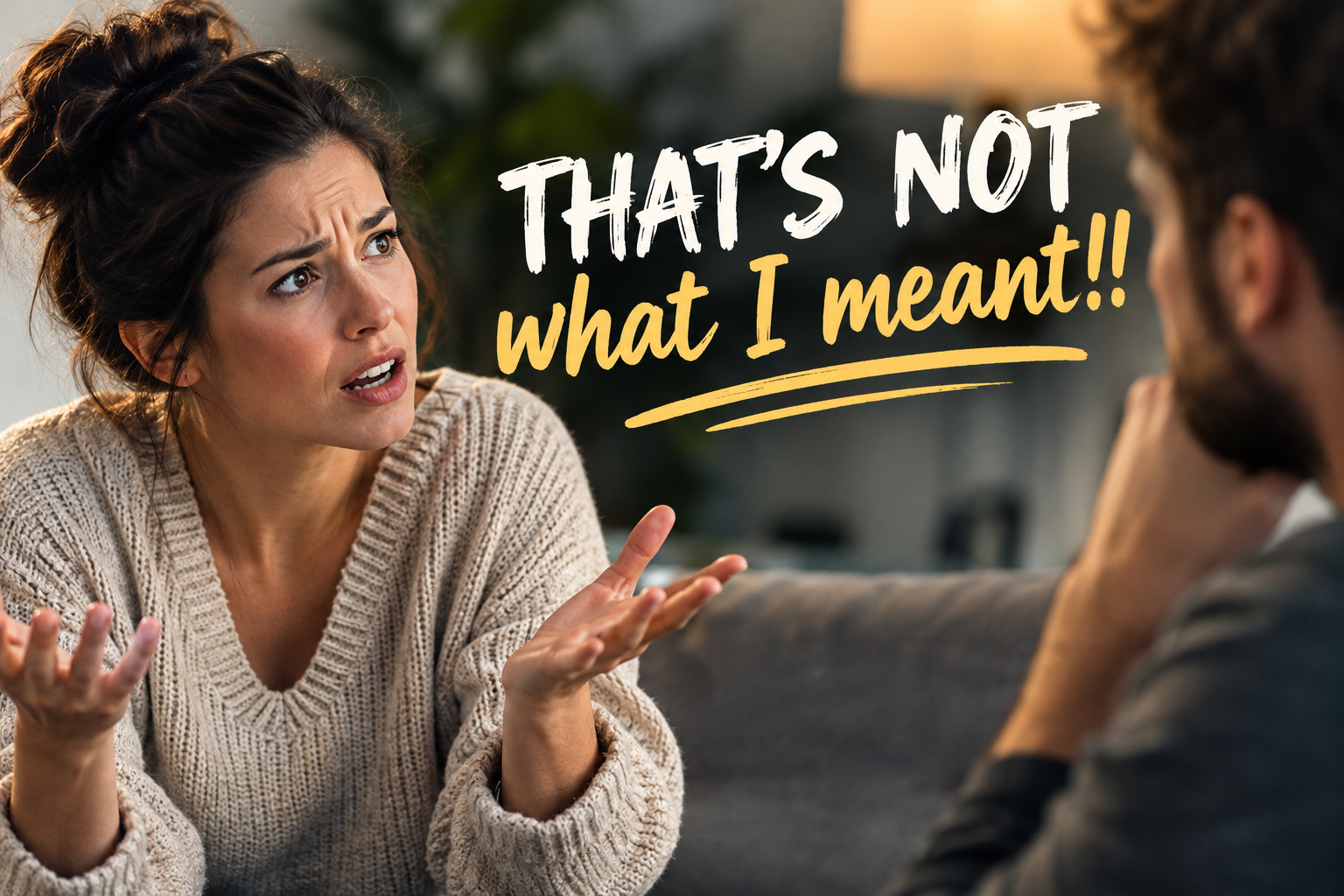
She says, "You left the dishes again." He says, "Fine. I'll do them." Ten minutes later they are not speaking, and neither one can quite explain how a sink full of plates turned into a storm.
In my years of counseling couples, I have heard some version of this story more times than I can count. What strikes me most is that both people usually walk away feeling unheard. Not because they don't love each other, but because the same words landed very differently on the other side of the room.
A word before we go further: what follows describes patterns I see often, not rules for every husband or every wife. In some marriages these roles are reversed, and every couple is its own story. But if you recognize yourself here, take heart. You are not alone, and this can change.
Same words, different ears
In the heat of an argument, many husbands speak to solve the problem, while many wives speak to be understood. Linguist Deborah Tannen described this as the difference between "report talk" and "rapport talk." Neither is wrong. But when each spouse hears the other through their own filter, ordinary words can sound like an attack.
Here is what that can look like:
What was said | What was meant | What may be heard |
|---|---|---|
He: "Fine. I'll do it." | "I want this to be over. I'll fix it." | "You're a nag, and I'm doing this to shut you up." |
He: "You're overreacting." | "Let's calm down so we can think." | "Your feelings don't matter." |
He: "Here's what you should do..." | "I love you, so I want to fix this for you." | "You're not listening. You just want to move on." |
He: silence | "I don't want to say something I'll regret." | "I don't care enough to answer." |
She: "You never help around here." | "I feel tired and alone in this." | "You're a failure as a husband." |
She: "We need to talk." | "I want us to be close again." | "I'm in trouble. Get ready to defend yourself." |
She: "It's fine." | "It isn't fine, and I need you to notice." | "Good. It's settled." |
She: raising it again | "This still hurts, and I don't feel heard yet." | "She'll never let this go." |
Notice the pattern. Almost every hurtful thing heard in that right column was never actually said. Most of the damage in an argument happens in the gap between what we mean and what our spouse receives.
When he goes quiet and she leans in
One of the most common patterns I see is what counselors call the pursue-withdraw cycle. One spouse, often the wife, moves toward the conflict because distance feels unbearable. The other, often the husband, pulls away because the intensity feels overwhelming.
Marriage researcher Dr. John Gottman found that men are more likely to "stonewall," to shut down and go silent in a heated argument. It usually isn't coldness. Many men become physically flooded during conflict: the heart races, the mind narrows, and words stop coming. Silence feels like the safest choice.
But to the spouse on the other side, that silence can feel like abandonment. So she presses harder, he retreats further, and the cycle tightens. Each one's way of coping triggers the other's fear.
Here is the hopeful part. Neither of you is the villain in this cycle. The cycle itself is the enemy, and you can face it together.
What Scripture says about our words
The Bible was speaking about tone long before anyone studied it.
"A soft answer turneth away wrath: but grievous words stir up anger" (Proverbs 15:1). The words may be the same; the tone decides whether they heal or wound.
"Let every man be swift to hear, slow to speak, slow to wrath" (James 1:19). Notice the order. Listening comes first, and it is the hardest part when we feel attacked.
"Let no corrupt communication proceed out of your mouth, but that which is good to the use of edifying, that it may minister grace unto the hearers" (Ephesians 4:29). Our words are meant to give grace to the one hearing them, not only to express what we feel.
And to husbands in particular, Peter wrote: "dwell with them according to knowledge" (1 Peter 3:7). To live with your wife with understanding means learning how she hears you, not only what you meant to say. The same grace is asked of wives: to believe the best about a husband who may be struggling to find his words.
A practice for this week
Try these the next time a conversation starts to heat up:
Ask, "What did you hear me say?" Then listen. You may be surprised how far it is from what you meant.
Say the feeling under the words. Instead of "You never help," try "I'm worn out, and I need you." Instead of "Fine," try "I want to fix this, but I'm feeling overwhelmed."
Take a break, and promise to come back. If you feel flooded, say so: "I need twenty minutes to calm down, and then I want to finish this." Walking away without a promise feels like abandonment. Walking away with one feels like care.
Lower your voice before you raise your point. A soft answer really does turn away wrath.
Pray together, even briefly. It is hard to stay enemies with someone you have just brought before God.
If the same argument keeps circling and you feel stuck, please reach out to a pastor or a Christian counselor. Asking for help is not a sign your marriage is failing. It is a sign you are fighting for it.
A prayer for marriages
Lord, You know the words we speak and the hearts behind them.
Where we have wounded each other without meaning to, heal us.
Where we have meant to wound, forgive us.
Make us quick to listen and slow to anger.
Give us ears to hear the love beneath hard words,
and courage to speak softly when we feel unheard.
Teach us that we are not enemies,
but two people learning to love as You love us.
Be the third strand in our cord, and our light in every storm.
Amen.
Which line in that table felt familiar? Share in the comments, or send me a message if you'd like prayer for your marriage. I'd be honored to pray for you.