Walk with me through this one...*
As we reflect on the story of Cain and Abel, we find ourselves navigating a complex web of emotions, behaviors, and psychological dynamics that can be both fascinating and disturbing. On the surface, the story of Cain and Abel appears to be a tale of rivalry and disobedience, with Cain's actions provoking Abel's reactions. However, as we delve deeper into the psychological lens of "narcissistic injury / shame-to-rage collapse," we begin to uncover a more nuanced and revealing picture of human nature.
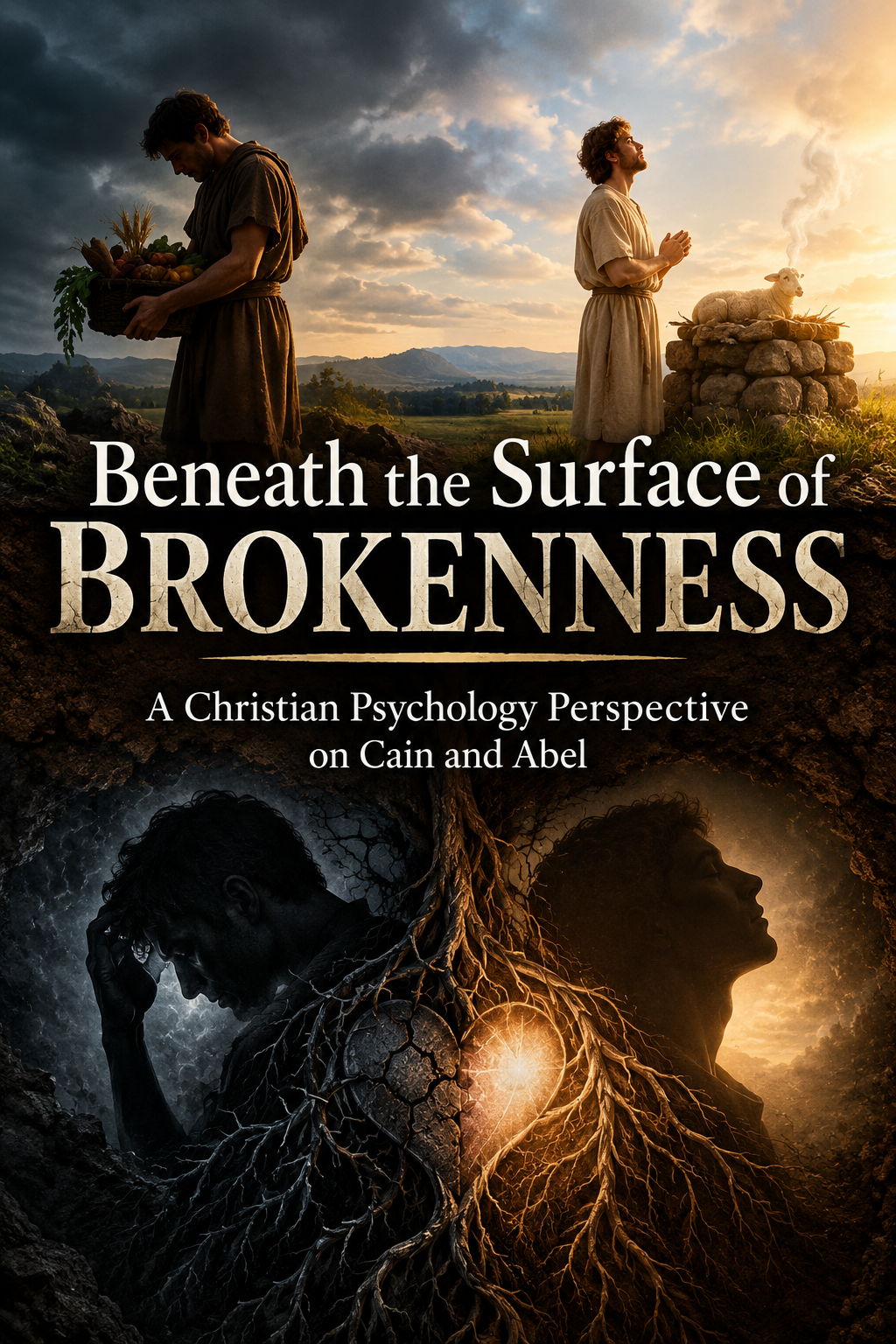
In Genesis 4:1-16, we witness the story of Cain and Abel, a narrative that has been interpreted in various ways throughout history. For many, it is a classic tale of rivalry and obedience, with Cain's actions being seen as a direct challenge to God's will. However, I'd like to propose a more nuanced reading of this story, one that recognizes the underlying psychological dynamics at play.
The Injuries of Cain
Cain's story is often seen as a tale of rivalry, with Cain challenging God's authority and seeking to usurp His power. However, this narrative can also be interpreted as a story of narcissistic injury, with Cain's actions being seen as a direct attack on God's self-worth. Cain's behavior is characterized by a sense of entitlement, a need to be recognized and acknowledged by God, and a sense of shame and inadequacy in light of God's greatness.
As we examine Cain's psychological dynamics, we find that he is struggling with feelings of inadequacy, a sense of shame and self-doubt that stems from his own self-worth issues. This is not a unique experience, as many people struggle with similar feelings of inadequacy and shame. However, Cain's response to these feelings is marked by a sense of narcissistic injury, with his actions being seen as a direct attack on God's self-worth.
The Collapse of Shame
Cain's behavior is also characterized by a sense of collapse, a feeling of shame and inadequacy that ultimately leads to his downfall. As we reflect on Cain's actions, we find that he is engaging in a pattern of self-destructive behavior, one that is marked by a sense of shame and inadequacy.
This pattern of behavior is often seen as a sign of narcissistic collapse, a psychological response to the collapse of one's sense of self-worth. In this sense, Cain's actions can be seen as a direct expression of his feelings of shame and inadequacy, a sense of collapse that ultimately leads to his downfall.
The Reckoning of Shame
As we examine Cain's psychological dynamics, we find that his actions are ultimately a response to the collapse of his sense of self-worth. In this sense, Cain's actions can be seen as a form of self-reckoning, a attempt to make amends for his own feelings of shame and inadequacy.
This pattern of behavior is often seen as a sign of narcissistic self-awareness, a recognition of one's own feelings of shame and inadequacy. In this sense, Cain's actions can be seen as a form of self-compassion, a recognition of his own need for self-reflection and healing.
Conclusion
As we reflect on the story of Cain and Abel, we find ourselves navigating a complex web of emotions, behaviors, and psychological dynamics that can be both fascinating and disturbing. Through the lens of "narcissistic injury / shame-to-rage collapse," we can gain a deeper understanding of the psychological dynamics at play in this story. Cain's actions can be seen as a direct expression of his feelings of shame and inadequacy, a sense of collapse that ultimately leads to his downfall. As we recognize the underlying psychological dynamics of this story, we can begin to understand the complexities of human nature and the ways in which we all struggle with feelings of shame and inadequacy.